Filter by Letter
Tree
Size
Adaptability
Fall Color
Growth Rate
Native Habitat
Hardiness
'Dynasty' Lacebark elm originated from the Natoional Arboretum's selection program, and possesses many traits which make it ideal for a multitude of landscape uses. 'Dynasty' forms a graceful, vase-shaped, spreading canopy of long, arching, and somewhat weeping branches. Leaves are two to three-inches-long, shiny, dark...
Show moreView Detail
Athena® has the most unusual branching of any of the Lacebark cultivars. It occurred to us the broad rainbow outline is perfectly suited for a multi-stem specimen. We love our improved round-headed Athena® Classic Elm with its tapered tracery of tidy branches and tight head....
View Detail
Allée® Lacebark Elm is a vigorous shade tree that forms a gigantic vase-shaped form. The urban tolerance of Lacebark Elms is the stuff legends are made of. This elm selection is a great choice where a large shade tree is needed.
Show moreView Detail
Filling the void of a small Lacebark Elm, we now have 'Small Frye' available, which is distinguished by its small size and broad rounded crown. Covered with very dense, dark green foliage, it creates a solid dome of green. The tree also has outstanding exfoliating...
Show moreView Detail
Chindo Viburnum is a great tough, flowering evergreen for the South. It is a dense, pyramidal shrub with lustrous dark green foliage that emerge with reddish tips in the spring. The clusters of small white flowers develop into bright red berries in the fall that...
Show moreView Detail
Walter's Viburnum is a shrub or small tree native to the southeast US that is densely twiggy and upright ascending. It is evergreen to semi-evergreen with a wild and splaying habit. Its native habitat is the coastal plains in hammocks, thickets, and swamp margins. This...
Show moreView Detail
Wintergreen is more cold hardy selection of this screening plant/specimen. Withstood -8F in north Atlanta in the mid-1980s. Another exciting selection from Dr. John Ruter of University of Georgia. Shade adaptation puts it in a small class of evergreen trees.
Show moreView Detail
Here is a new way to provide a large sized hedge or flowering evergreen specimen tree. Dr Ruter of UGA propagated this unusually cold hardy form of Viburnum odoratissima after it survived -8F in North Atlanta. It has remained unharmed and attractive in our...
Show moreView Detail
Rusty Blackhaw Viburnum grows in dry to moist soil in full sun to partial shade slowly reaching a height and width of 10 to 20 feet. Clusters of small, white flowers mature in early spring followed by a blue drupe that matures in fall. This low maintenance...
Show moreView Detail
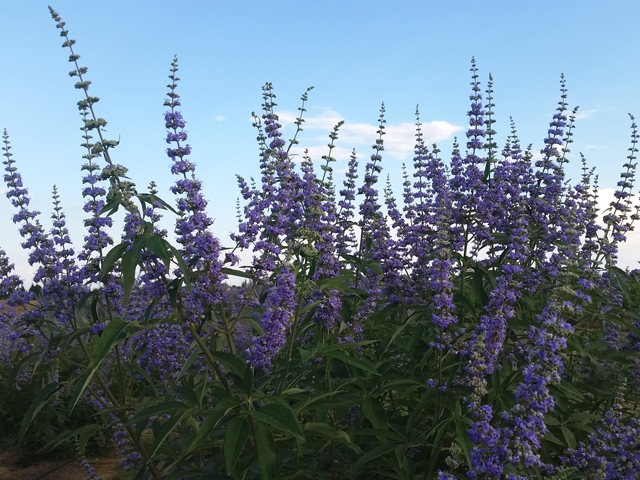
Vitex agnus-castus 'Shoal Creek' adds fresh, long-lasting color to summer landscapes. Growing with a dense upright habit, this small vase shaped tree features sage-scented, dark gray-green palmate leaves with silvery undersides that move in the wind creating a wonderful display . Its fragrant, large blue-violet flowers...
Show moreView Detail
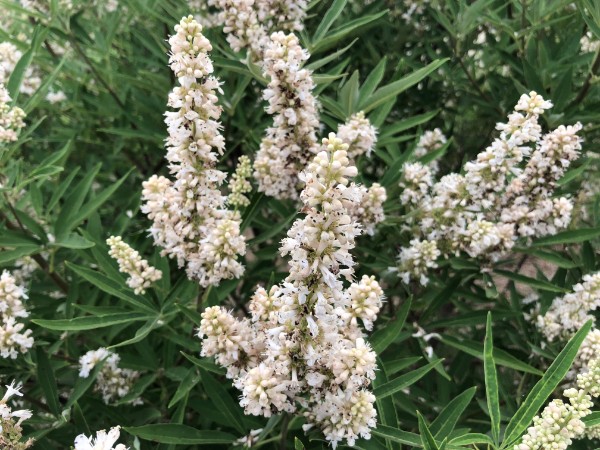
This White Vitex offers a flower which will fit into any color scheme. Vitex are summer blooming small trees in the South and cut-back perennials in zones 5 and 6. One of the few flowering trees we send to the demanding environs of Texas, these are prized...
View Detail