
Filter by Letter
Tree
Size
Adaptability
Fall Color
Growth Rate
Native Habitat
Hardiness
Total results: 237


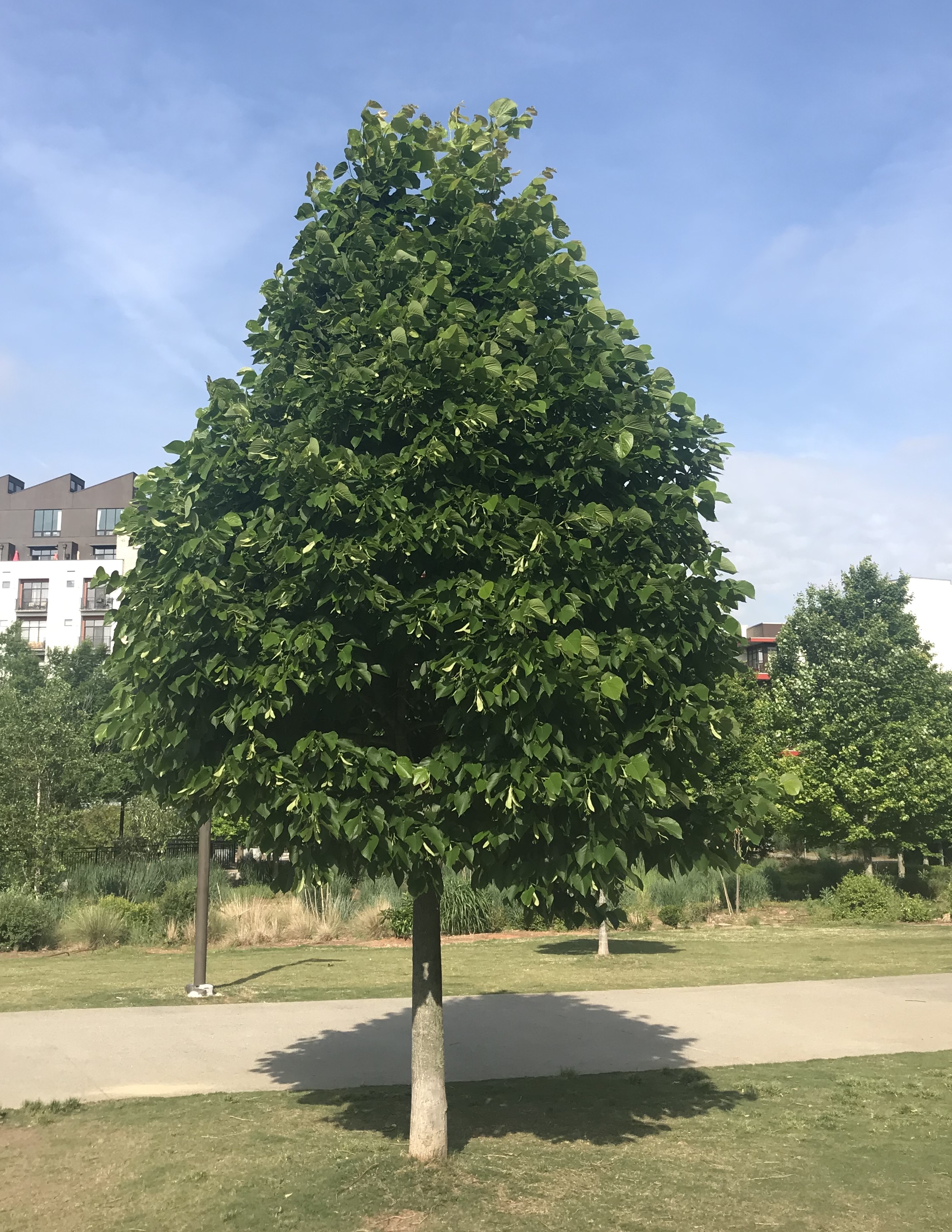
This excellent American Linden hybrid adds another native shade tree to our diverse landscape. American Linden will eventually become a large tree but the growth rate is not rampant so it should serve well in many landscape situations. Once is established Redmond American Linden is...
View Detail
American Linden is a large, stately tree that should be used in spacious settings. The bold heart shaped foliage becomes in scale as the tree matures. Tilia americana occurs widely across the eastern half of the U.S.
Show moreView Detail

Sterling Silver Linden is a very ornamental shade tree with a broad, oval habit of growth. The glossy leaves are dark green on top and silvery-white underneath, giving it a shimmering effect with each breeze. The early summer blooms are fragrant, showy and attractive to...
Show moreView Detail

Winged elm is gaining favor again as a native tree for tough situations. Between 1960 and 1980, Atlanta architect and developer John Portman, created dozens of premier properties including many of Atlanta's downtown landmarks. It seems that winged elm was his favorite tree because they are to...
View Detail
Kalysta Winged Elm is a great improvement for this native tree species! Kalysta has a strong central leader and a vase-shaped crown, and the usual small cork-like wings on the branches which give this Elm its name. Along with its uniform growth habit, Kalysta's dark...
View Detail
Traveling on I-475 near Macon, GA, John Barbour noticed a tree in the wooded buffer area near one of the Macon interchanges that looked like a "green wall"-it was completely thick and full from the ground up with awesome dark green foliage. From afar...
Show moreView Detail

Jefferson provides a spreading umbrella of shade in a variety of site conditions. Selected as a 70 year old tree on the National Mall and introduced by the National Arboretum, Jefferson has impressed as a young tree with sturdy branching and handsome foliage.
View Detail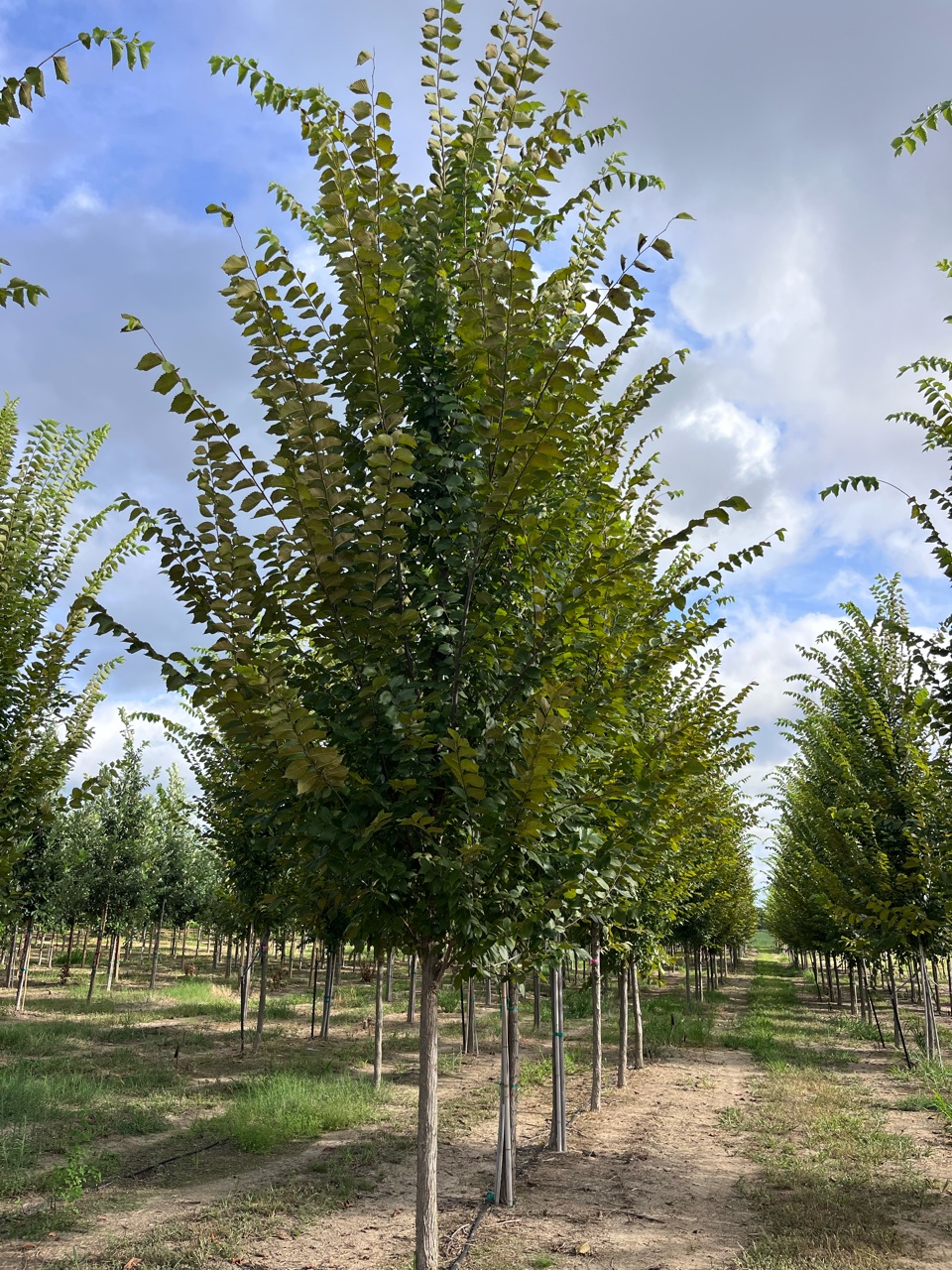
Colonial Spirit American Elm is an extremely hardy and adaptable shade tree with an upright vase-shaped habit of growth and a dense branching structure. it is an excellent choice for modern landscapes due to its high DED resistance and its classic American elm form.
Show moreView Detail

Selected 90 years ago, Princeton American Elm (Ulmus americana 'Princeton') has thrived on the streets of New Jersey for nearly a century forming one of the most beautiful tree plantings in the world. The most recent research from the National Arboretum ranks Princeton American Elm at...
Show moreView Detail

Everclear™ Lacebark Elm is set apart from other Lacebark Elms by its narrower proportions. Though not a columnar tree, it grows much taller than wide to an estimated 40' x 25', while other Ulmus parvifolia grow wider than high. It makes a good street tree...
Show moreView Detail

'Dynasty' Lacebark elm originated from the Natoional Arboretum's selection program, and possesses many traits which make it ideal for a multitude of landscape uses. 'Dynasty' forms a graceful, vase-shaped, spreading canopy of long, arching, and somewhat weeping branches. Leaves are two to three-inches-long, shiny, dark...
Show moreView Detail

Allée® Lacebark Elm is a vigorous shade tree that forms a gigantic vase-shaped form. The urban tolerance of Lacebark Elms is the stuff legends are made of. This elm selection is a great choice where a large shade tree is needed.
View Detail